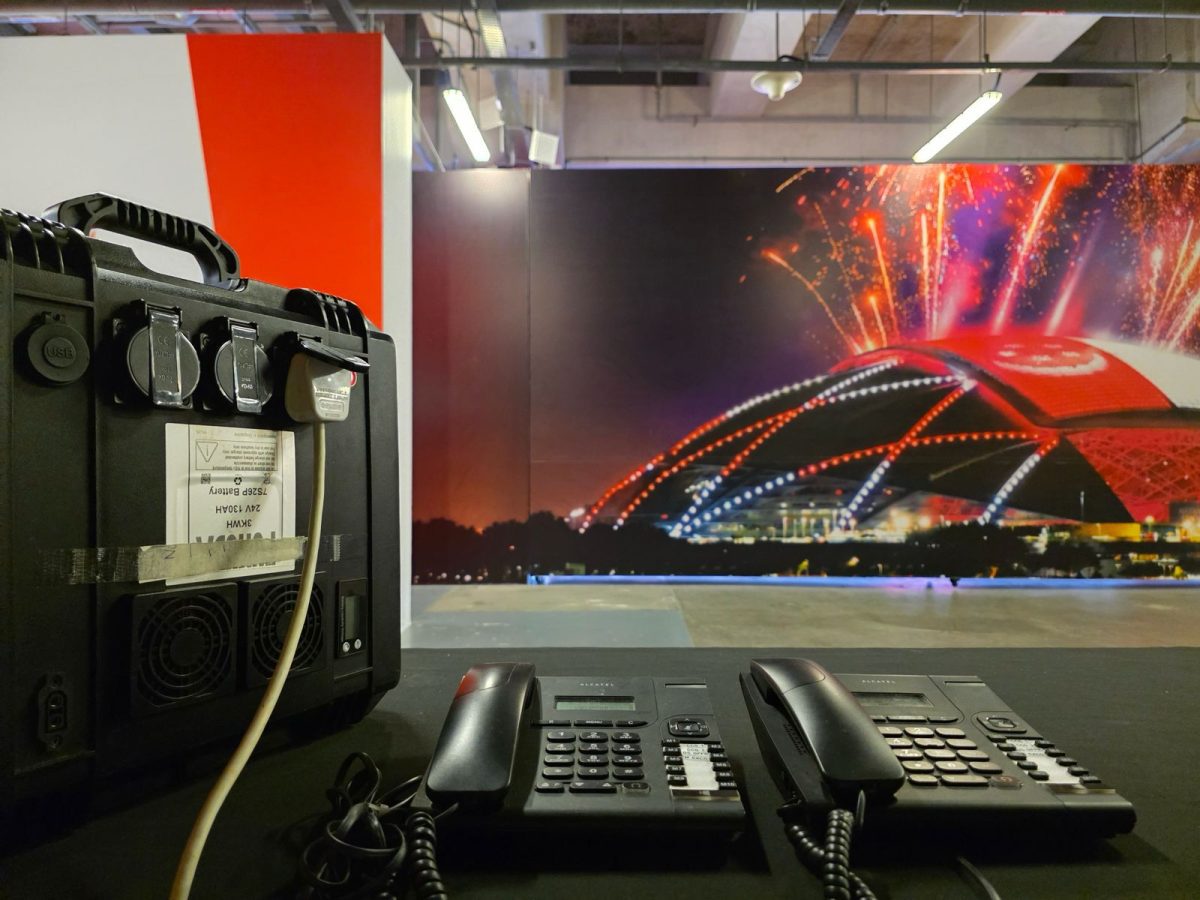
A Fukuda battery charger helps keep industrial batteries charged and ready when stored DC power is needed. When the main power cuts out, the battery jumps in as backup. The charger keeps the battery topped up during regular use and brings it back to full strength after it’s needed.
At Fukuda Battery, we look at the charger as one part of the complete DC power setup. The battery type, system voltage and operating conditions all matter. A Fukuda battery charger in Singapore should be selected based on the needs of the actual application.
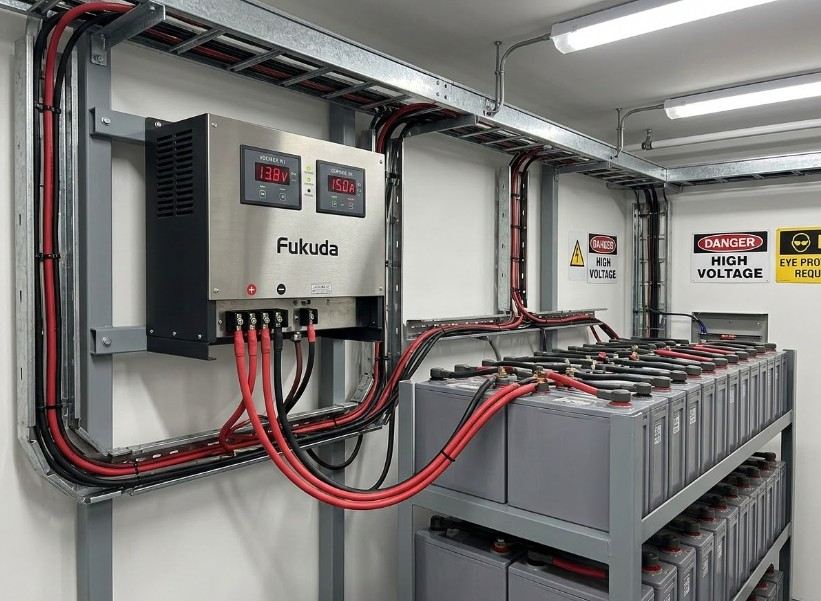
Why Industrial DC Power Systems Need a Fukuda Battery Charger
Batteries run on the energy they store, but once that’s gone, you have to recharge them to keep things running. That’s why having a good charging setup matters so much in any DC backup system.
A Fukuda battery charger steps in here—it delivers the energy your batteries need to charge up again. Basically, the battery stores energy for use later, and the charger’s job is to refill it when it runs low. They work together, but each has its own clear role.
How a Fukuda Battery Charger Works With the Battery
The charger supplies electrical energy to charge the battery. The battery stores that energy until the system needs it. Both parts need to suit the same application and system requirements.
A Fukuda battery should therefore be considered together with its charging arrangement. Battery voltage, capacity and the requirements of the connected system can affect what equipment is needed. Looking at these points together helps avoid treating the charger and battery as completely separate parts.
Keeping the Battery Ready for Use
A backup battery is useful only if it has enough stored power when it is needed. Once a battery has discharged, it needs time to recharge. The charging arrangement helps keep the battery prepared for future use.
This is one reason Fukuda battery chargers are used as part of industrial DC systems. We consider the charging equipment alongside the batteries and the wider system. The aim is to understand how the different components fit together for the intended application.
What to Check Before Choosing a Fukuda Battery Charger
A charger needs to suit both the battery and the DC system. Choosing one without checking the battery type or system requirements can create problems with the overall arrangement.
Points to consider include:
- Battery type and specifications
- Required DC voltage
- Battery capacity
- Charging requirements
- Connected DC loads
- Operating conditions
- System configuration
- Monitoring or control needs
A Fukuda battery charger should be reviewed as part of the full system. The charger, battery and connected load all have a role in how the arrangement operates.
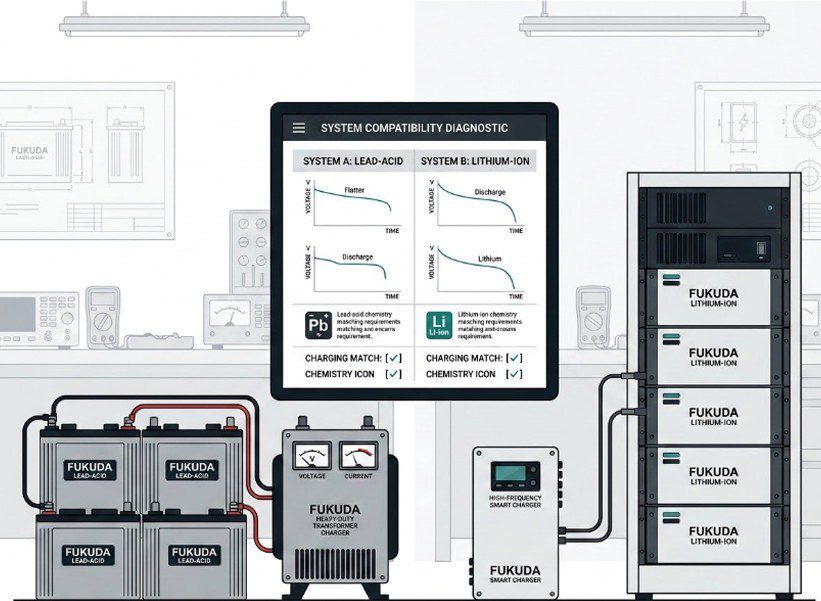
Why Battery Type Matters When Choosing a Fukuda Battery Charger
Battery systems can have different charging requirements. This is why the battery type should be identified before the charging setup is finalised. The charger then needs to be considered in relation to that particular battery and application.
At Fukuda Battery, we can help customers assess how Fukuda batteries may fit into their DC power requirements. Capacity, intended use, and operating conditions can all affect the wider setup. These details should be considered before the equipment is selected.
Fukuda Battery Charger and Battery Roles in an Industrial DC System
|
System Component |
Main Role | Why It Matters |
|
Battery charger |
Supplies power for charging |
Helps restore the battery after use |
|
Battery |
Stores DC electrical energy |
Provides stored power when needed |
| DC load | Uses power from the system |
Affects the system’s power requirements |
|
Monitoring equipment |
Tracks system conditions |
Helps users monitor relevant operating conditions |
| System controls | Manage power functions |
Supports the intended operation of the system |
The setup can vary from one application to another. A Fukuda battery charger in Singapore actually fits into all sorts of industrial setups—it depends on the voltage you need, your battery’s configuration, and what kind of environment you’re working in. Picking a charger isn’t just about the device itself. You really need to look at the whole system so everything works smoothly together.
What if the Main Power Goes Out?
In a backup system, the battery can supply DC power when the normal source is unavailable. How long it can do this depends on the battery capacity, its condition and the amount of power being used by the connected load.
When normal power returns, the charging system can recharge the battery. Fukuda battery chargers support this charging cycle as part of a suitable DC power arrangement. The actual charging time and system performance will still depend on the equipment and operating conditions involved.
Why Consider the Complete Fukuda Battery and Charger System
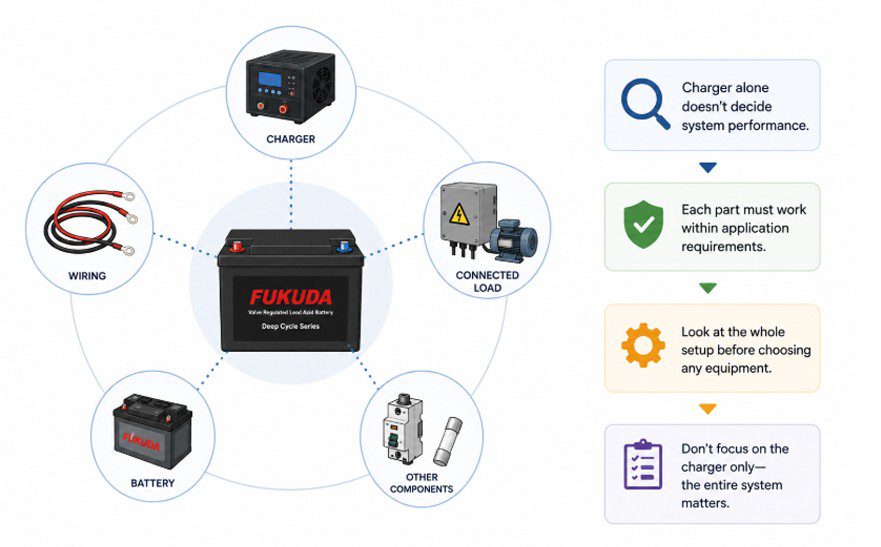
The charger alone cannot determine how the full system will perform. The battery, connected load, wiring and other components also matter. Each part needs to work within the requirements of the application.
Talking about a Fukuda battery and how to charge it isn’t just about picking a charger. You have to see the whole setup. That way, you understand what needs attention before you choose any equipment. A lot of people just focus on the charger and forget about everything else—but the entire system matters.
How Fukuda Battery Chargers Support Industrial DC Power Requirements
Industrial DC systems may need stored power to remain available for a specific purpose. A suitable charging arrangement helps maintain the battery as part of that system. Regular checks can also help identify conditions that need attention.
A Fukuda battery charger works with the battery and the wider system. At Fukuda Battery, we can help customers review their requirements and consider suitable Fukuda batteries and charging arrangements for their applications.